
Bureau of Indian Standards
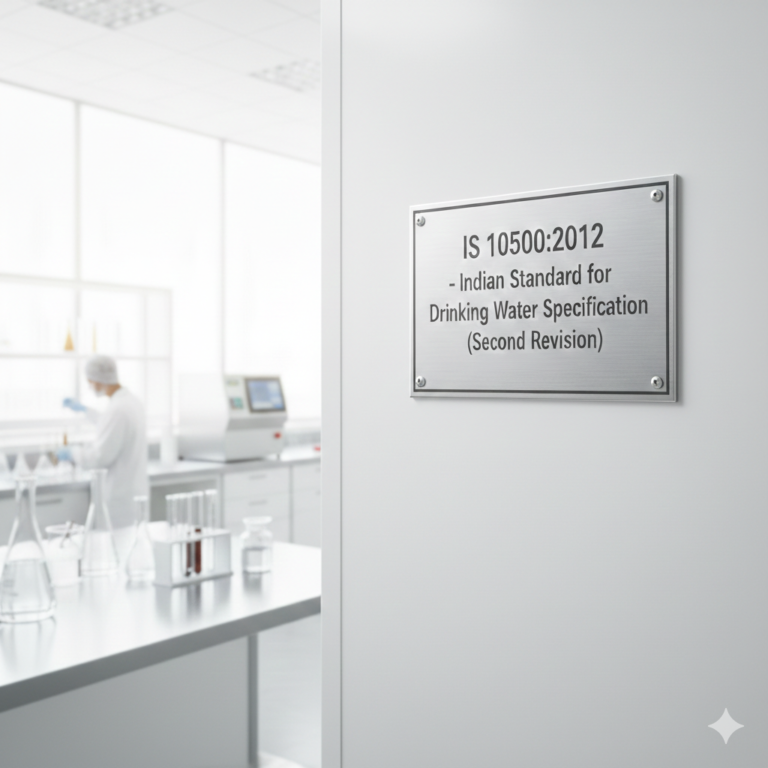
This Indian Standard (Second Revision) was adopted by the Bureau of Indian Standards, after the draft finalized by the Drinking Water Sectional Committee had been approved by the Food and Agriculture Division Council. The Bureau of Indian Standards Act is an act to provide for the establishment of a national standards body for the harmonious development of the activities of standardisation, conformity assessment and quality assurance of goods, articles, processes, systems and services and for matters connected therewith or incidental thereto.
Background and Development
This standard was originally published in 1983. A report prepared by the World Health Organization in cooperation with the World Bank showed that in 1975, some 1,230 million people were without safe water supplies. These appalling facts were central to the United Nations decision to declare an International Drinking Water Supply and Sanitation decade, beginning in 1981. Further, the VI Five-Year Plan of India had made a special provision for availability of safe drinking water for the masses.
Water Quality Challenges in India
As per the eleventh five year plan document of India (2007-12), there are about 2.17 lakh quality affected habitations in the country with more than half affected with excess iron, followed by fluoride, salinity, nitrate and arsenic in that order. Further, approximately:
A majority of these cases are contributed by unclean water supply and poor sanitation.
Revision Objectives
The eleventh five year plan document of India (2007-2012) recognizes dealing with the issue of water quality as a major challenge and aims at addressing water quality problems in all quality affected habitations with emphasis on:
International Alignment
The second revision was undertaken to upgrade the requirements of the standard and align with internationally available specifications on drinking water. Assistance has been derived from:
Manual on Water Supply and Treatment, third edition — revised and updated May 1999, Ministry of Urban Development, New Delhi
Key Updates in Second Revision
This revision includes additional requirements for:
Modified requirements for:
New inclusions:
Scope
This standard prescribes the requirements and the methods of sampling and test for drinking water.
Terminology
Drinking Water — Water intended for human consumption for drinking and cooking purposes from any source. It includes water (treated or untreated) supplied by any means for human consumption.
Requirements Structure
This standard specifies acceptable limits and permissible limits in the absence of alternate source.
The framework operates as follows:
Water Quality Parameters
These include characteristics like color, odor, pH value, taste, turbidity, and total dissolved solids that affect the aesthetic quality of water.
This category covers elements and compounds that are generally not harmful in small quantities but can cause problems when present in excessive amounts, such as aluminum, calcium, chloride, fluoride, iron, manganese, and sulfate.
These are substances that are harmful even in small quantities, including heavy metals like cadmium, lead, mercury, and toxic compounds like cyanide and pesticides.
This covers alpha and beta emitters that may be present in water sources.
Specific limits are established for various pesticides commonly found in water sources, based on consumption patterns, persistence, and available manufacturing data.
Bacteriological Requirements
Water in Distribution System
Ideally, all samples taken from the distribution system, including consumers’ premises, should be free from coliform organisms. The standard specifies detailed bacteriological quality requirements for:
Key Requirements:
Virological Requirements
General Principles
Disinfection Effectiveness
Testing Requirements
Biological Requirements
General Approach
All samples should ideally be free from biological organisms. Biological examination helps in:
Parasites and Organisms
Special Considerations
Water Quality Surveillance
Routine surveillance of drinking water supplies should be carried out by relevant authorities to:
Implement water safety approaches incorporating risk identification
Prevention Measures
Special precautions should be taken to prevent contamination from chlorine-resistant parasites such as cryptosporidium species and giardia.
Sampling
Representative samples of water shall be drawn as prescribed in IS 1622 and IS 3025 (Part 1), ensuring proper collection methods to maintain sample integrity and provide accurate assessment of water quality.
Implementation Guidelines
For Water Utilities
For Regulatory Authorities
For Consumers
Note: This document provides an overview of the IS 10500:2012 standard. For complete technical specifications, detailed testing methods, and specific limit values, reference should be made to the complete standard document and associated testing protocols by following links:
Disclaimer: The information contained in this Article is intended solely for personal non-commercial use of the user who accepts full responsibility of its use. The information in the article is general in nature and should not be considered to be legal, tax, accounting, consulting or any other professional advice. We make no representation or warranty of any kind, express or implied regarding the accuracy, adequacy, reliability or completeness of any information on our page/article.