Background
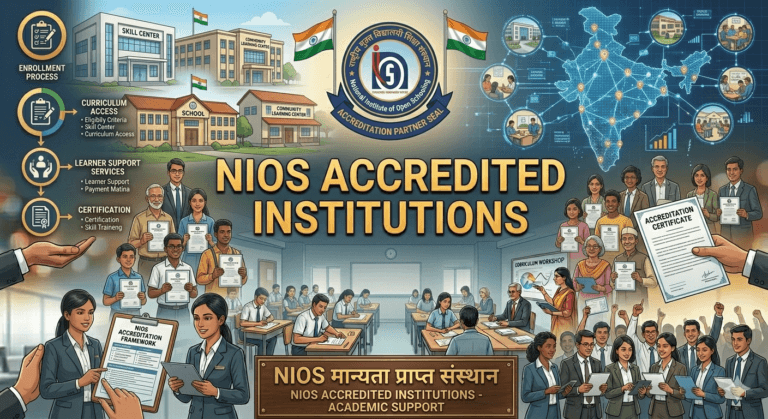
The National Institute of Open Schooling operates through an extensive network of approximately 7,712 study centers across India and 27 centers internationally. These accredited facilities serve as crucial touchpoints for delivering open and distance learning to diverse learner groups.
Applicability
Registered NGOs, Private/Govt. ITIs, Polytechnics, Jan Shikshan Sansthan, KVKs, and Health Institutions & Hospitals etc. have to apply for accreditation to run Vocational Education Training Programmes/Courses
Categories of Accredited Centers
Academic Institutions (AIs)
Approximately 4,714 centers provide academic courses at secondary and senior secondary levels. These are primarily affiliated schools from recognized boards, with select registered philanthropic societies also qualifying for accreditation.
Vocational Training Centers (AVIs)
Around 1,500 institutions deliver vocational programs based on their available infrastructure and teaching personnel for specific courses.
Specialized Education Centers (SAIEDs)
Over 100 institutions cater specifically to learners with physical or sensory disabilities and those facing social or geographical disadvantages. These centers must hold recognition from the Rehabilitation Council of India or certification under the Persons with Disabilities Act, 1995.
ITI Collaboration Centers (SAIASD)
84 Industrial Training Institutes, including central institutes under the Directorate General of Training, enable ITI learners to obtain secondary and senior secondary certificates concurrently.
Basic Education Agencies (AAs-OBE)
1,343 agencies, comprising voluntary organizations, NGOs, and government bodies, implement the Open Basic Education program for children and adults.
Minority Education Initiatives
The network includes 1,370 minority institutions and 349 Madrasas to promote educational access in underserved communities.
Traditional Knowledge Centers (IKT)
Schools, Gurukuls, and educational units run by NGOs offering courses rooted in Indian knowledge traditions.
Core Responsibilities
Academic Functions:
Administrative Functions:
Operational Framework
All accredited institutions function under standardized guidelines that are periodically updated. They provide critical support infrastructure enabling NIOS to deliver flexible, learner-centric education to over 4.13 million students, making it the world’s largest open schooling system.
Disclaimer: The information contained in this Article is intended solely for personal non-commercial use of the user who accepts full responsibility of its use. The information in the article is general in nature and should not be considered to be legal, tax, accounting, consulting or any other professional advice. We make no representation or warranty of any kind, express or implied regarding the accuracy, adequacy, reliability or completeness of any information on our page/article.