
Central Electricity Authority (Safety Requirements for Construction, Operation and Maintenance of Electrical Plants and Electric Lines) Regulations, 2011
Central Electricity Authority (Safety Requirements for Construction, Operation and Maintenance of Electrical Plants and Electric Lines) Regulations, 2011 (CEA Safety Regulations, 2011) were notified by the Central Electricity Authority under Section 73 of the Electricity Act, 2003.
Key Compliances under Competition Act, 2002
The Competition Act, 2002 forms the foundation of India’s competition law regime, aimed at preventing anti-competitive practices, regulating combinations, and protecting consumer interests through oversight by the Competition Commission of India (CCI).
Key compliances under The Central Electricity Authority (Installation and Operation of Meters) Regulations, 2006
The Central Electricity Authority (Installation and Operation of Meters) Regulations, 2006 establish a comprehensive framework governing the standards, ownership, installation, operation, testing, maintenance, and safety of electricity meters across the power sector.
Key Compliances under Central Electricity Authority (Measures relating to Safety and Electric Supply) Amendment Regulations, 2026
The Central Electricity Authority (CEA), constituted under the Electricity Act, 2003, is responsible for prescribing technical and safety standards for electrical systems in India.
Key Compliances under Bihar Industrial Establishments (National and Festival Holidays and Casual Leave) Act, 1976
The Bihar Industrial Establishments (National and Festival Holidays and Casual Leave) Act, 1976 was enacted to regulate grant of national/festival holidays and casual leave for employees in industrial establishments. After the creation of Jharkhand in 2000, the Act was adopted by the state to ensure uniform leave benefits and worker welfare along with Bihar Industrial Establishments (National and Festival Holidays and Casual Leave) Rules, 1979. It aims to provide statutory holidays, leave entitlements, and maintain proper records. The law also balances employee rights with employer obligations for compliance and inspections.
NIOS Accredited Institutions

The National Institute of Open Schooling operates through an extensive network of approximately 7,712 study centers across India and 27 centers internationally. These accredited facilities serve as crucial touchpoints for delivering open and distance learning to diverse learner groups.
Compliance under The Tamil Nadu Labour Welfare Fund Act, 1972
The Tamil Nadu Labour Welfare Fund Act, 1972 was enacted to provide for the constitution of a Labour Welfare Fund for promoting the welfare of labour and for matters connected therewith in the State of Tamil Nadu. The Act led to the establishment of the Tamil Nadu Labour Welfare Board for administration and utilization of the Fund, and it came into force from 1 January 1973. The accompanying Tamil Nadu Labour Welfare Fund Rules, 1973 prescribe the procedural framework for contributions, maintenance of accounts, audit, submission of returns, and administration of the Fund. These Rules also regulate the manner of collection of fines and unpaid accumulations and their credit to the Fund.
Board of Secondary Education Rajasthan (BSER/RBSE)
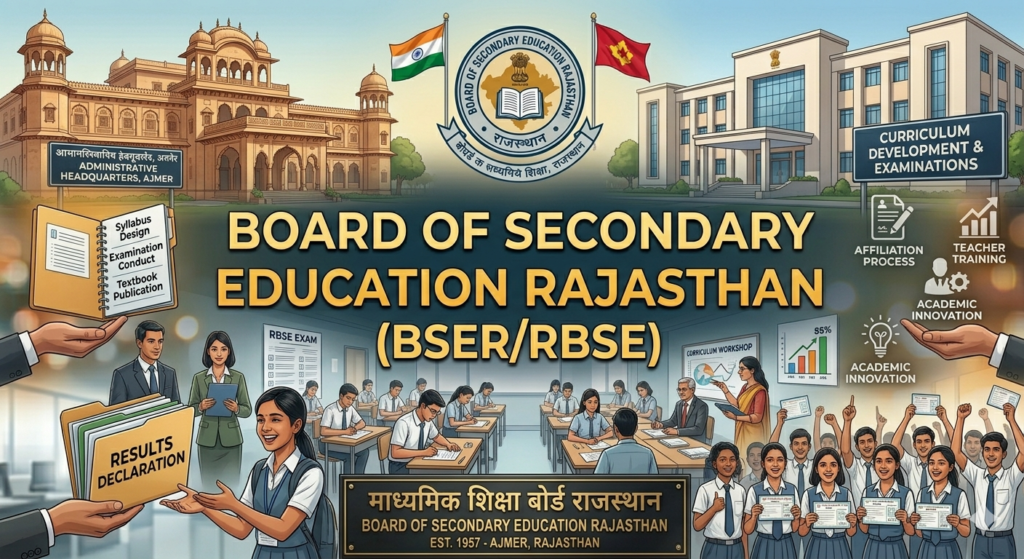
The Board of Secondary Education Rajasthan was established following the enactment of the Rajasthan Secondary Education Act in 1957. Initially inaugurated in Jaipur on December 4, 1957, the institution was subsequently relocated to Ajmer in 1961. By 1973, the Board moved into its current permanent multi-story facility in Ajmer, equipped with comprehensive administrative amenities.
Key Compliances for Construction, Equipment and Maintenance of Motor Vehicles[Part 2]
The Motor Vehicles Act, 1988 is the primary legislation governing all aspects of road transport in India, including vehicle registration, licensing, construction, safety, and operation of motor vehicles.
Regulatory Framework for Driver Licensing, Transport Vehicle Control, and Mandatory Third-Party Motor Insurance
Chapter II of the Motor Vehicles Act 1988 deals with the licensing of drivers of motor vehicles. It lays down the legal framework for grant of learner’s licence and driving licence, eligibility conditions, disqualifications, and regulatory control over driving competence