
Punjab Shops and Commercial Establishments Act, 1958

The Punjab Shops and Commercial Establishments Act, 1958, as extended to Haryana, regulates working conditions, employment rights, hours of work, holidays, leave entitlements, and obligations of employers and employees in shops and commercial establishments. It ensures proper registration, employee welfare, and workplace safety while protecting vulnerable groups such as women and children.
Maharashtra Shops and Establishments (Regulation of Employment and Conditions of Service) Act, 2017
The Maharashtra Shops and Establishments (Regulation of Employment and Conditions of Service) Act, 2017 was enacted to regulate the working conditions of employees in shops, commercial establishments, residential hotels, restaurants, theatres and other establishments across Maharashtra. It replaced the earlier 1948 Act with the objective of ensuring uniformity, introducing online compliance processes, and aligning labour practices with modern business needs.
License under the Rajasthan Municipality Act, 2009
The Rajasthan Municipality Act, 2009 was enacted to consolidate and amend the laws relating to the governance, administration, and management of municipalities in the state of Rajasthan. The Act was designed in line with the 74th Constitutional Amendment, which provided constitutional status to municipalities as institutions of local self-government. Its primary objective is to ensure democratic decentralization, effective urban governance, and systematic planning for urban development, sanitation, health, and infrastructure.
Uttar Pradesh Fire Service Act, 2005
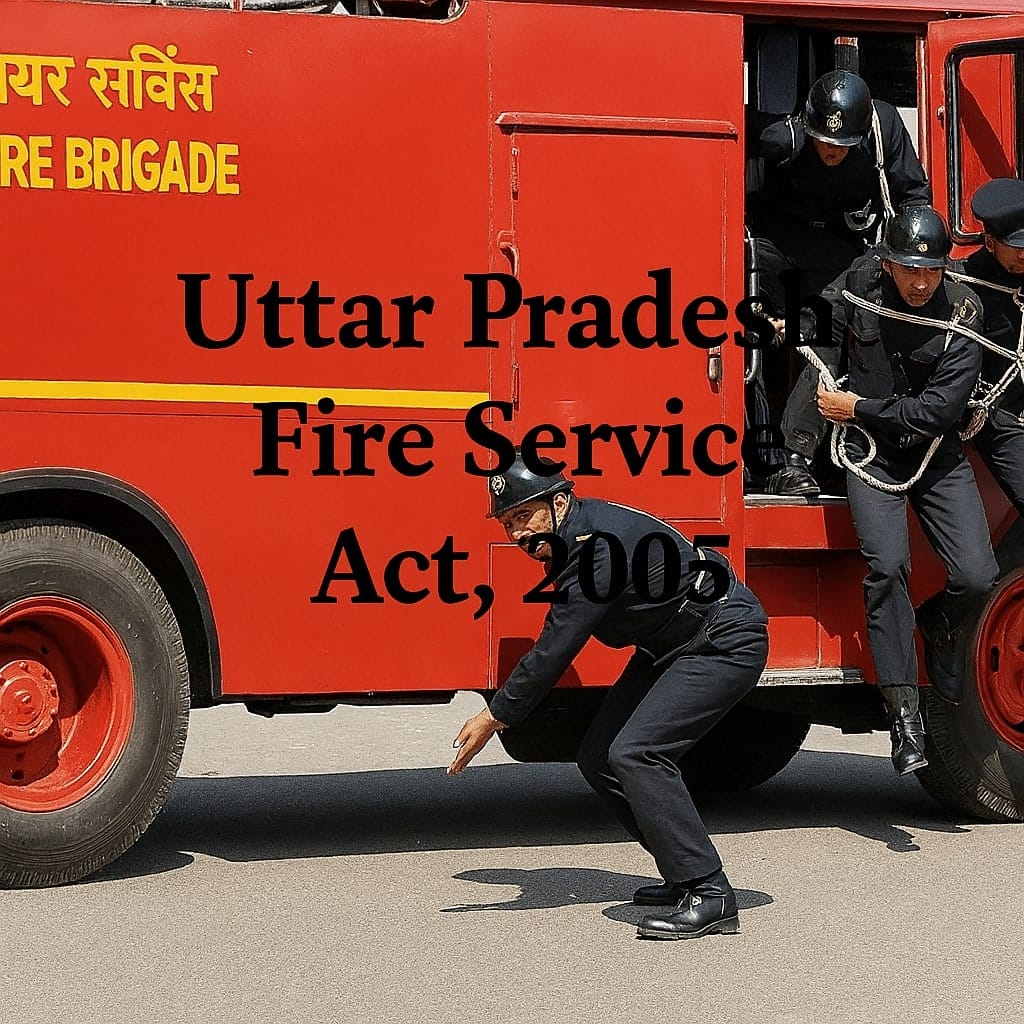
The Uttar Pradesh Fire Service Act, 2005 was enacted to strengthen fire prevention, fire safety, and fire-fighting services in the state. The law lays down provisions for obtaining fire licenses, maintaining fire safety standards, and ensuring that buildings and establishments are constructed and operated with adequate fire protection measures. The Act is supported by the U.P. Fire Prevention and Fire Safety Rules, 2005, which provide specific guidelines in line with the National Building Code of India and local building by-laws. Its main objective is to safeguard life and property by making fire safety compliance a legal necessity.
Uttar Pradesh Lifts and Escalators Act, 2024
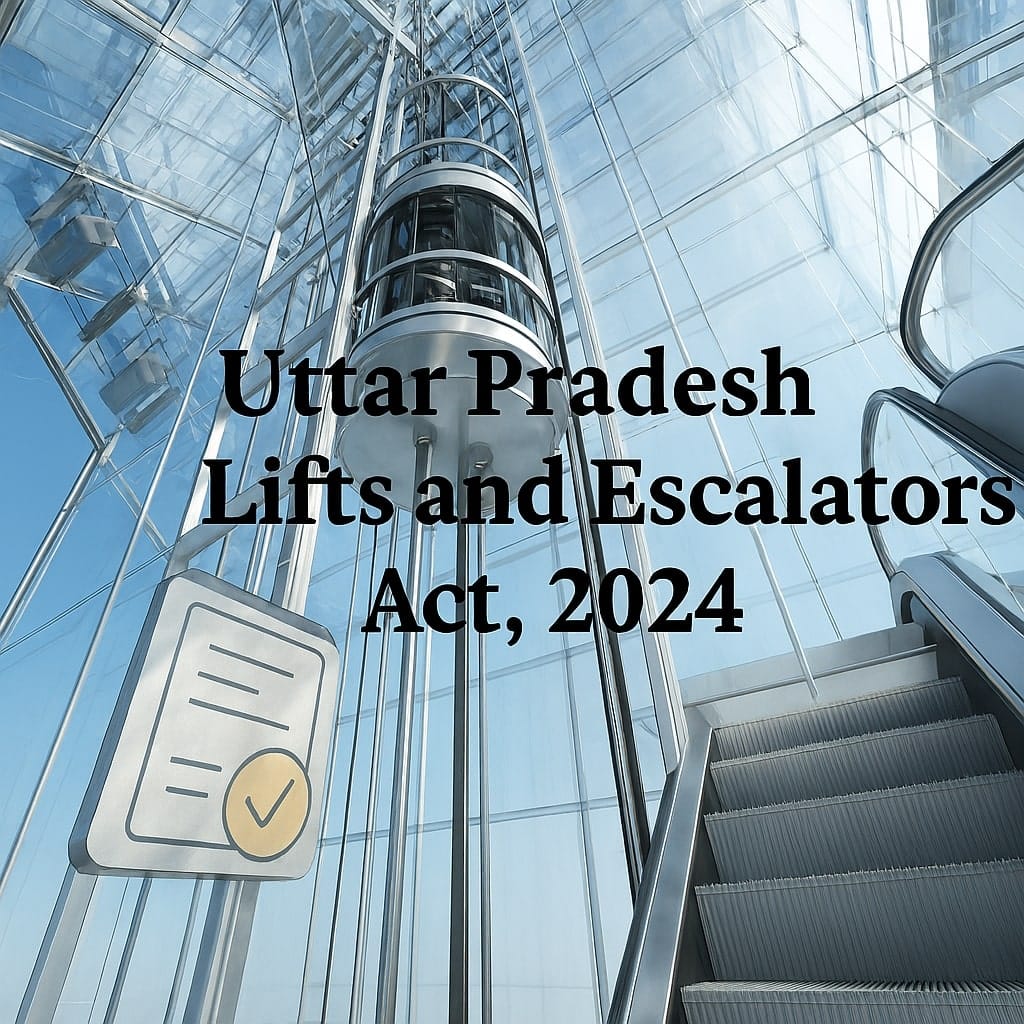
The Uttar Pradesh Lifts and Escalators Act, 2024 was enacted to regulate the installation, maintenance, and safe operation of lifts and escalators across the state. It was introduced in response to rising accidents and safety concerns, especially in high-rise areas. The Act mandates registration, annual maintenance contracts, safety devices, insurance, and accident reporting, with the objective of ensuring passenger safety and accountability of owners and service providers.
Uttar Pradesh Shops & Establishment Act, 1962

The Uttar Pradesh Shops & Establishment Act, 1962 was enacted to regulate working conditions in shops, commercial establishments, residential hotels, restaurants, theatres, and other places of public amusement or entertainment. It lays down provisions relating to registration of establishments, working hours, holidays, leave, payment of wages, and rights and duties of employers and employees. The Act is supported by the Uttar Pradesh Dookan Aur Vanijya Adhishthan Niyamavali, 1963, which prescribes detailed rules and procedures for implementation.
West Bengal Fire Services Act, 1950 read with Fire Prevention and Fire Safety Rules, 2003

The West Bengal Fire Services Act, 1950 was enacted to provide for the establishment and maintenance of fire services in the State, along with the prevention, control, and extinguishment of fires. Over time, the Act has been supplemented by the Fire Prevention and Fire Safety Rules, 2003, which lay down detailed procedures, standards, and obligations for owners, occupiers, and organizers of premises or public events. Together, these provisions aim to ensure structural fire safety, regulate storage and handling of hazardous substances, mandate licensing, and enforce accountability in case of fire-related negligence.`
West Bengal Lift, Escalator and Travelators Act, 2019

The West Bengal Lift, Escalator and Travelators Act, 2019, along with the Rules of 2022, was enacted to ensure the safe installation, licensing, operation, and maintenance of lifts, escalators, and travelators within the state. With the increasing use of mechanized vertical and horizontal transport systems in residential, commercial, and industrial spaces, the Act seeks to standardize safety measures, mandate qualified maintenance, and establish clear reporting mechanisms in case of accidents. It emphasizes accountability of owners, proper licensing, and the role of inspectors in monitoring compliance.
Sanstha Aadhaar Number (Formerly “Rajasthan Business Registration Number)

An updated structure of NIC code wise enterprises is not available in the state except only in respect of units/factories covered under the Annual Survey of Industries (ASI). The ASI covers relatively large units belonging to the manufacturing and repair sub-sectors which are registered under Section 2M (i) and 2M (ii) of the Factories Act 1948 or under the Beedi and Cigar Workers (Conditions of Employment) Act. for other sectors, large units/enterprises no such updated and satisfactory structure existed thus an industry based database is required to plan any survey of such units, such as the Survey of Non-Manufacturing Industries (SNMI), having establishments along with some basic items of information for all sub-sectors such as trade, hotels and restaurants was desirable.
Gujarat Shops and Establishments (Regulation of Employment and Conditions of Service) Act, 2019

The Gujarat Shops and Establishments (Regulation of Employment and Conditions of Service) Act, 2019 was enacted to regulate the employment conditions of workers in shops, commercial establishments, residential hotels, restaurants, theatres and other establishments across Gujarat. It replaced the earlier Act with an objective to ensure better regulation of service conditions, enhance worker welfare, and bring uniformity in compliance through digitized processes.